Your Apple Watch Knows When You're Distracted (Here's How to Use It)
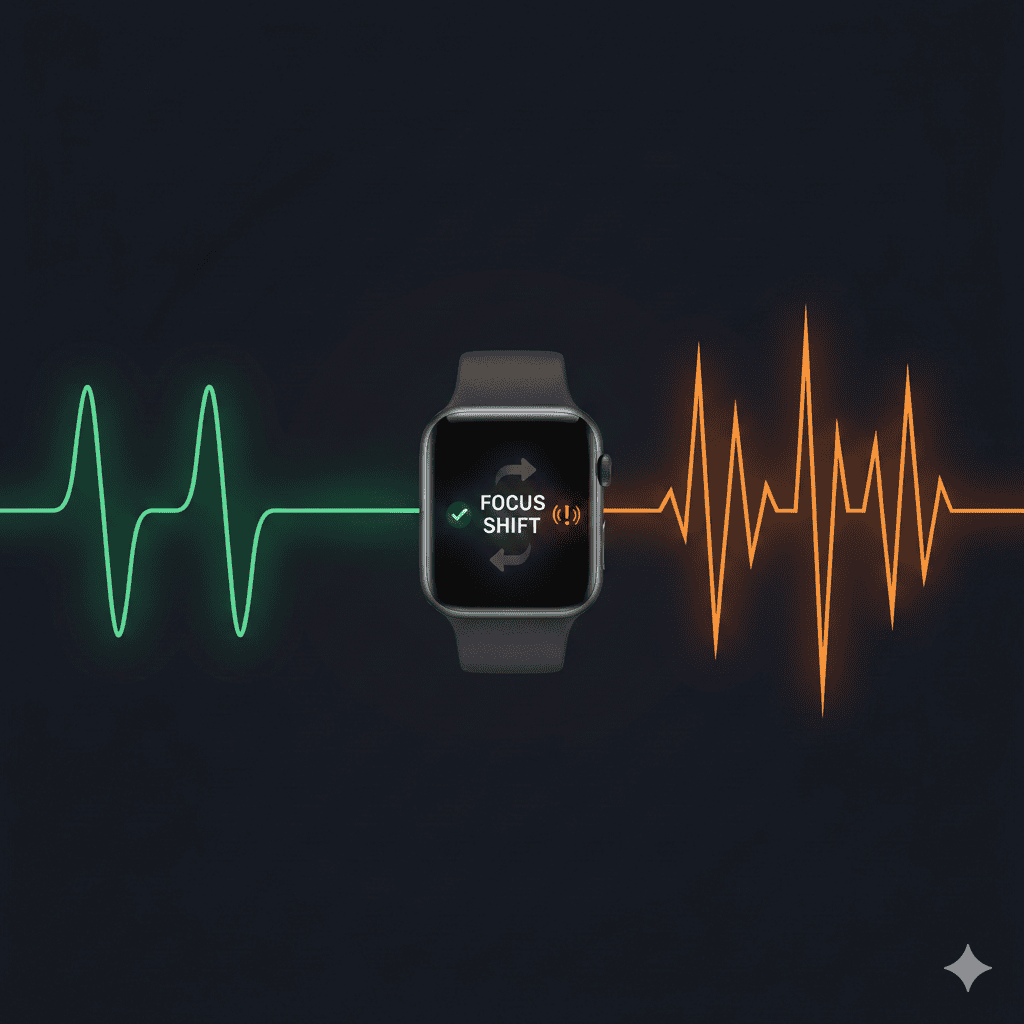
I was 23 minutes into a focus session when my Apple Watch buzzed. Not a notification—I'd turned those off. A gentle tap, like someone tapping my wrist to say "hey, you still there?"
I looked down. The screen showed a simple message: "Attention shifting."
I hadn't noticed anything wrong. I was still staring at my screen, still technically "working." But when I checked my browser tabs, I'd somehow drifted from my actual task to reading an article about... I don't even remember. Something irrelevant.
I used to think distraction was a willpower problem—that if I just tried harder, I'd stay focused. That assumption cost me months of pretending to work while actually accomplishing very little.
What changed wasn't discipline. It was feedback.
The Thesis: Distraction Is a Lag Problem, Not a Willpower Problem
Here's what I've come to believe: the reason most people struggle with focus isn't lack of effort. It's that by the time you notice you're distracted, you've already lost 5, 10, sometimes 20 minutes.
The distraction happened in the past. You're only discovering it now.
This changes everything about how to approach the problem. You don't need more willpower to resist distraction. You need earlier detection. You need to close the gap between when distraction starts and when you notice it started.
Your Apple Watch can close that gap—if you use it right.
What I Tried Before (And Why It Failed)
Before I figured this out, I went through the standard playbook.
App blockers. I installed Freedom, then Cold Turkey, then a few others. They worked for about two weeks. Then I started finding workarounds—checking email on my phone instead, switching to "research" that was really just browsing. The apps blocked specific behaviors, but my brain just found new outlets. Blocking symptoms didn't address the underlying pattern.
Pomodoro timers. I tried the 25-minute-on, 5-minute-off rhythm. The problem was the timer didn't know whether I was actually focused during those 25 minutes. I'd often "complete" a session having spent half of it mentally elsewhere. The timer tracked time, not attention.
Accountability apps. I tried apps that locked my phone or tracked screen time. But they measured after the fact. I'd see my daily report showing 47 pickups and feel bad, but that data came too late to help in the moment.
The pattern was always the same: I'd start strong, drift without noticing, and only realize later—sometimes much later—that the session had gone sideways.
What I needed wasn't punishment after the fact or barriers before the fact. I needed something that noticed the drift while it was happening.
The Signal I Wasn't Using
There's a sensor on the back of the Apple Watch that most productivity apps completely ignore: the heart rate monitor.
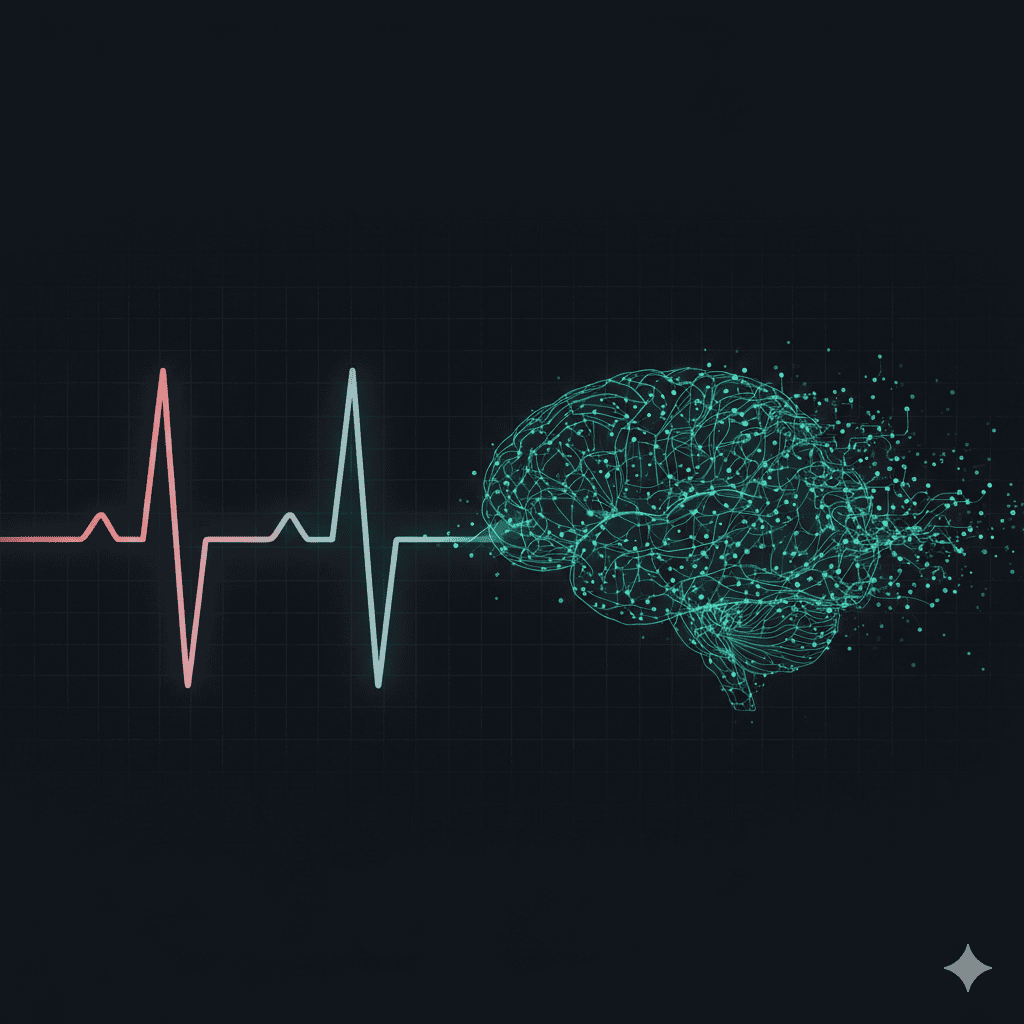
Your heart doesn't beat like a metronome. Even at a steady 70 BPM, the intervals vary—820 milliseconds, then 870, then 840. When you're in calm, sustained focus, that pattern is relatively stable. When you're distracted or stressed, it gets erratic.
The shift often happens 30-60 seconds before you consciously realize you've lost focus. Your body knows first. Your mind catches up later.
This is why "just notice when you're distracted" doesn't work as advice. By the time you notice, the distraction is already in progress. The body signal comes earlier—but without something translating that signal into awareness, you miss it.
The Apple Watch has the sensor. Most apps just don't use it for this.
What Focus Drift Actually Looks Like in the Data
I've been tracking this for months now. The pattern is consistent.
Deep focus shows stable heart rate with low variance—the numbers barely move. If you graphed it, you'd see a relatively flat line with gentle undulation. This is the state where work feels effortless.
Early drift shows increased variance. Your heart rate starts bouncing around more. The average might not change, but the spread widens. You're still "working," but your body is already signaling that attention is fragmenting.
This is the crucial window. You don't feel distracted yet. You might even think you're focused. But the drift has started.
Full distraction shows a heart rate spike—sometimes 10-15 BPM above baseline—followed by erratic patterns. Even "relaxing" activities like checking social media create this signature. Your nervous system doesn't find scrolling relaxing at all.
The insight that changed my approach: there's a detectable window between when drift starts and when you notice. If something alerts you during that window, you can redirect before you've lost significant time.
Why "Just Eliminate Distractions" Isn't Enough
This is why the standard advice misses the point.
"Eliminate distractions" assumes distraction comes from outside—notifications, open tabs, your phone sitting nearby. Remove the triggers, and focus should follow.
But distraction also comes from inside. Boredom. Fatigue. A stray thought about something you forgot. The impulse to check something—anything—after your brain has been focused for a while.
You can't eliminate internal triggers. They're part of how your brain works. What you can do is catch the moment they start pulling you off task, before you've fully disengaged.
That's what biofeedback does. It doesn't block anything. It notices when your physiology shifts and gently brings your attention back to that shift.
The System I Use Now
The setup I've landed on analyzes heart rate during focus sessions and categorizes state into four levels:
Excellent (Deep Focus): Heart rate variance under 5 BPM. You're locked in. No intervention.
Good (Stable Focus): Variance between 5-10 BPM. Solid concentration. No intervention.
Moderate (Attention Shifting): Variance between 10-20 BPM. This is the early warning zone. A gentle haptic tap. Often enough to snap back before full disengagement.
Variable (Focus Drift): Variance over 20 BPM. Significant attention fragmentation. A slightly more insistent reminder.
The "moderate" zone is where the magic happens. It catches you during the transition—when you're starting to drift but haven't fully left. A small nudge at this moment is far more effective than a loud alarm after you're already deep in a rabbit hole.
There's also spike detection. If heart rate suddenly jumps 15+ BPM above your session baseline, something happened. A stressful thought, a notification you saw but didn't act on, the physiological pull of wanting to check something. The spike catches acute distractions; variance catches gradual drift.
This is exactly what we built FocusFit to do. Start a focus session on your iPhone, and your Watch automatically begins monitoring. It establishes your baseline, tracks variance in real-time, and delivers gentle haptic reminders when attention shifts. The system is designed to be ambient—helpful without being intrusive.
What Actually Changed
After months of using this, a few things became clear:
I was less focused than I thought. Before biofeedback, I'd estimate maybe 10-15% of my "focus time" was actually unfocused. The data showed it was closer to 30%. I'd drift for 5-10 minutes regularly without noticing. This was humbling to see.
Early intervention is dramatically easier than late intervention. When I get a tap at the "attention shifting" stage, I can redirect immediately. When I don't catch drift until I'm fully down a rabbit hole, getting back takes 5-10 minutes of mental effort. The early tap saves far more than the few seconds it takes.
Some days are just harder. Low sleep, high stress, or starting the day with phone scrolling all correlate with more frequent drift alerts. The Watch became a mirror showing which days my focus foundation was solid and which days I was fighting uphill.
The alerts became less frequent over time. This surprised me. I expected to become dependent on external feedback. Instead, I started noticing the internal sensation that preceded drift—a subtle restlessness, a shift in breathing, a feeling of wanting to look away. The biofeedback trained me to recognize my own signals.
That last point matters most. The goal isn't to rely on your Watch forever. It's to use the external signal to learn your internal signals—until you don't need the Watch to notice.
Something to Try
If you want to test this yourself, here's a modest experiment:
Tomorrow, start a focus session wearing your Apple Watch. Set a recurring timer for every 10 minutes. When the timer goes off, don't look at anything—just notice how your body feels. Any restlessness? Urge to check something? Slight tension?
Then check your heart rate on the Watch. Note whether it's higher or lower than it was at the session start.
Do this for three sessions. You're not trying to fix anything yet—just noticing whether there's correlation between how you feel and what the Watch shows.
If you find a pattern, you've learned something useful: your body is giving you data you weren't using. The question becomes what to do with it.
When This Doesn't Help
A few honest caveats:
If you're severely sleep-deprived or burned out, no amount of biofeedback will fix the underlying problem. The Watch will just show you constant variance. Address the root cause first.
Caffeine skews the data. High caffeine intake elevates heart rate variance independent of focus state. If you're heavily caffeinated, the signal is noisier.
Some sessions don't need this. Email, routine admin work, casual reading—these don't require sustained deep focus. Save the monitoring for sessions where drift actually costs you.
The system isn't perfect. Sometimes variance increases for reasons unrelated to attention—standing up, someone walking into the room, a sudden noise. Use the alerts as prompts to check in with yourself, not as absolute verdicts.
The Shift That Mattered
I used to see distraction as a character flaw. I'd notice I'd wasted an hour and think: I need more discipline. I need to try harder.
That framing kept me stuck for years. Trying harder at the moment of distraction is too late—the distraction already happened.
What actually helped was shifting from willpower to feedback. Instead of relying on catching myself (which I'm bad at), I built a system that catches drift early and nudges me back.
The Apple Watch was already on my wrist, already measuring heart rate, already capable of haptic feedback. It just wasn't being used for this.
Now it is. The tap at minute 23 wasn't annoying—it was exactly what I needed. It caught me before I lost 20 minutes to aimless browsing. And over time, I've started noticing the drift sensation myself, before the Watch does.
That's the goal: use external feedback to train internal awareness. Until you don't need the external feedback anymore.
Your Watch knows when you're distracted. The question is whether you're using that information.
Focus monitoring through biometrics is a tool for self-awareness, not a replacement for addressing underlying issues like chronic stress or sleep deprivation. If you're struggling with focus consistently, consider whether lifestyle factors need attention first.
Ready to rebuild your focus?
Start your 14-day free trial of FocusFit and train your attention with AI-powered coaching.
Download FocusFit